Commercial procurement managers and wholesale buyers face constant operational risks. Unreliable supply chains, unexpected stockouts, and poor quality control quickly jeopardize commercial margins. Finding the best seafood supplier requires a rigorous buyer’s checklist. You must evaluate every potential seafood partner on vendor stability, strict regulatory compliance, and cold chain security.
Evaluating reliable seafood supplier options depends on clear industry benchmarks. Trusted suppliers maintain vertically integrated operations to control raw material sourcing. Leading enterprises like DINHOLG leverage offshore vessels, certified aquaculture, and IQF flash-freezing facilities to preserve peak quality. Furthermore, tier-one suppliers keep three-to-six-month safety stock buffers. This reserve shields buyers from seasonal fishing bans and price volatility. Securing your bulk frozen catfish inventory requires evaluating these critical logistics capabilities today.
Key Takeaways
-
Vertically integrated suppliers offer three-to-six-month safety stock reserves to prevent sudden inventory shortages.
-
IQF flash-freezing technology preserves cellular moisture and maintains natural fish texture during ocean transit.
-
HACCP and ISO 9001:2015 certifications guarantee food safety and complete batch traceability for every order.
-
Heavy-duty packaging and temperature-monitored reefer containers protect product quality throughout global transit.
Evaluating Seafood Supplier Reputation and Traceability
Auditing Corporate History and Global Export Reach
You need a seafood supplier with a good reputation to safeguard your supply chain. Long-term export success demonstrates operational stability for seafood suppliers across international borders. Vertically integrated companies control their export production from ocean harvest to final delivery. Commercial buyers avoid unproven vendors that lack documented export history.
For instance, DINHOLG manages six offshore fishing vessels and global export operations reaching over 30 countries. Choosing an established seafood supplier protects your procurement program from sudden market disruptions. Experienced suppliers navigate international trade laws easily. Strong infrastructure guarantees smooth logistics for every overseas shipment.
Verifying Batch Traceability and Regulatory Licensing
Modern seafood sourcing demands absolute batch traceability from harvest to regional warehouse distribution. You must verify that your sustainable seafood vendor maintains end-to-end traceability for every bulk frozen catfish supplier order. Clear tracking records guarantee seafood product origin from sustainable sources. Precise documentation allows quick identification of individual catches.
Proper traceability reduces food recall exposure and protects your overall brand image. Valid international certifications, such as HACCP and ISO 9001:2015, prove processing facility compliance. Leading seafood suppliers uphold strict quality standards across all production lines. Regulatory compliance prevents costly port delays during customs inspections.
Assessing Market Track Record and Client References
Evaluating supplier reputation requires a thorough review of real market feedback. Reliable frozen catfish wholesale partners share client references and historical delivery metrics willingly. A solid market reputation built over years ensures consistent seafood quality for your growing business. Environmental sustainability remains a core operational priority for premium producers.
You secure higher profitability when you partner with certified suppliers. Traceable sourcing practices simplify customs clearance during international seafood shipping. Selecting a reliable seafood supplier strengthens your commercial market position long term. Competent suppliers deliver contract promises without unexpected delays.
Quality Standards for Bulk Frozen Catfish Procurement
You must establish clear specifications when purchasing frozen whole fish in commercial quantities. Premium vendors protect raw harvest freshness through modern freezing techniques and strict facility management.
Inspecting IQF Flash-Freezing Technology
Standard static freezing causes large ice crystals to form inside fish muscle tissue. These large ice crystals rupture delicate cell walls, causing moisture loss and soft texture upon thawing. Advanced processors like DINHOLG use Individual Quick Frozen (IQF) tunnel systems instead. Ultra-fast freezing rapidly lowers core temperatures to lock in cellular moisture. IQF frozen catfish maintains structural product integrity during ocean transit. You receive fish fillets and whole fish with natural muscle firm firmness, fresh taste, and original weight.
|
Feature / Mechanism |
IQF Tunnel Technology |
Conventional / Slow Freezing |
|---|---|---|
|
Freezing Speed & Temperature |
Ultra-fast freezing at ultra-low temperatures |
Slow freezing in critical temperature zone |
|
Ice Crystal Formation |
Produces small, uniform, and tiny ice crystals |
Allows large, destructive ice crystals to grow |
|
Cellular Structure Impact |
Prevents cell membrane and wall rupture |
Ruptures cell walls and muscle tissue |
Mandating HACCP and ISO Quality Certifications
You must verify that your bulk frozen catfish supplier maintains accredited international standards. Certified plants operate under strict Hazard Analysis Critical Control Point programs and ISO 9001:2015 quality frameworks. These rigorous protocols guarantee proper sanitation, continuous thermal monitoring, and total chemical purity across all processing lines.
Top seafood exporters also secure Halal certification to expand your export market reach. Halal compliance requires full physical separation of seafood lots during production, custom packaging, and cold storage. Independent auditors inspect these facility management practices thoroughly:
-
Operational Audit Checks: Auditors evaluate procurement records, supplier approvals, storage areas, equipment, cleaning logs, batch traceability, labeling, and warehouse dispatch logs.
-
Raw Material Verification: Systematic inspection checks ingredients, additives, processing aids, packaging materials, and associated supplier credentials.
-
Facility & Equipment Controls: Examination verifies hygiene standards, production line segregation, equipment sanitation, staff practices, and contamination prevention protocols.
Verifying Net Weight Yields and Moisture Control
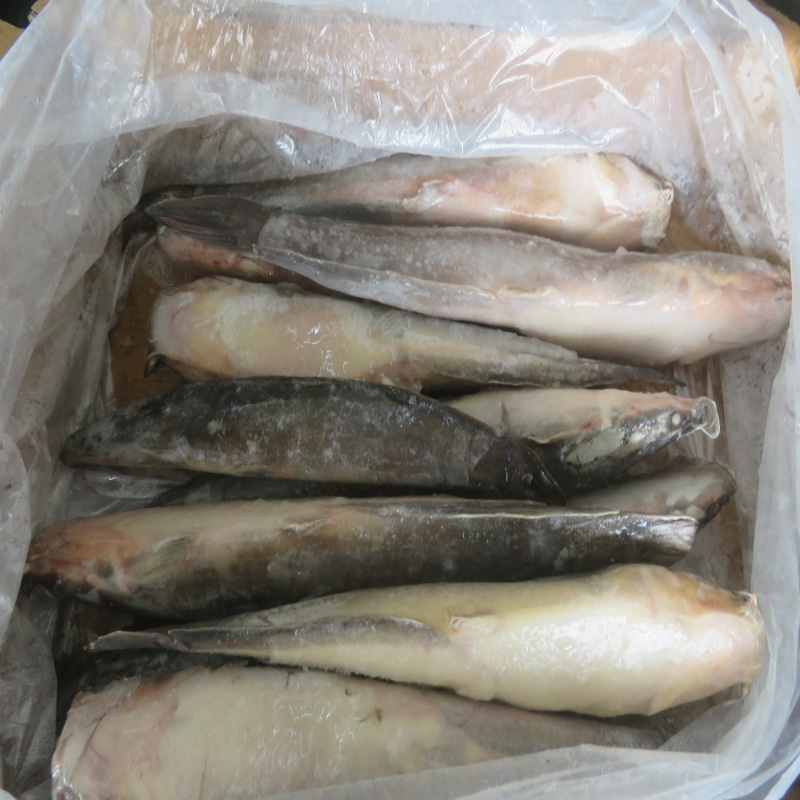
Commercial buyers require precise net weight compliance to preserve profitability. Unscrupulous vendors inflate shipping weight with thick protective ice glazing. You must perform drip-loss testing on frozen catfish bulk packaging to confirm true yield after thawing.
A reliable frozen catfish wholesale partner provides accurate protective glazing without diluting fish mass. Furthermore, leading suppliers like DINHOLG enforce strict piece-weight variation limits to guarantee uniform cooking results for end users. Choosing a enterprise committed to quality and sustainability ensures complete regulatory food safety across every batch.
|
Quality Category |
Benchmark / Standard |
Technical Requirement |
|---|---|---|
|
Food Safety & Regulation |
Regulatory Compliance |
Certified HACCP and FDA-compliant facilities |
|
Sustainability |
Third-Party Certification |
ASC or BAP certification standards |
|
Chemical Residues |
Purity Standards |
Verification of no added hormones or antibiotics |
|
Supply Chain & Traceability |
Cold Chain Management |
Full temperature documentation during transit |
|
Packaging & Labeling |
Traceability Standards |
Transparent labeling of origin, harvest dates, and storage rules |
|
Shelf Life |
Product Stability |
Minimum 12-month shelf life under frozen storage |
|
Sizing Consistency |
Weight Tolerance |
Strict piece-weight variation within ±5% |
Strict compliance audits safeguard product integrity from harvest to client warehouse arrival. Partnering with a reliable frozen whole catfish supplier builds strong supply security for your business.
Logistics Capabilities of a Bulk Frozen Catfish Supplier
Cold Chain Management and Regional Hub Access
You need an experienced seafood supplier to maintain unbroken cold chains from processing plants to final destination. Modern facilities transfer fresh seafood products directly into temperature-monitored reefer containers. Integrated seafood export logistics protect valuable cargo from destructive thermal fluctuations during long maritime transit routes. Leading suppliers maintain regional warehouse hubs in strategic international distribution locations.
For example, DINHOLG operates expanding regional warehouse hubs across Africa and Europe. Local hub access substantially reduces delivery lead times for commercial buyers. Reliable suppliers monitor cold storage temperatures constantly to preserve product integrity. Secure logistics networks guarantee smooth seafood ocean freight clearance and rapid dispatch at major global ports.
Inventory Buffers and Year-Round Supply Stability
Seasonal fishing bans and sudden weather changes often disrupt global seafood trade without advance warning. Unprepared suppliers frequently experience inventory stockouts and sharp price increases. Commercial procurement operations demand a stable bulk frozen catfish supplier with reliable safety stock reserves. Maintaining adequate inventory buffers shields your commercial business from seasonal market volatility.
Tier-one suppliers maintain a substantial three-to-six-month safety stock reserve of pelagic fish and aquatic species. Primary suppliers store these reserves safely inside certified seafood storage facilities. Large inventory buffers help global suppliers fulfill urgent export orders without continuous price adjustments. A dependable seafood supplier stabilizes market prices and ensures year-round order fulfillment.
Packaging Durability and Freight Specifications
International ocean shipping exposes boxed seafood cargo to heavy physical pressure and rough handling during loading. Inferior master cartons collapse easily under high stacking loads inside maritime reefer containers. Damaged outer packaging compromises product integrity and leads to costly inventory loss. Professional export operations utilize heavy-duty corrugated master cartons with protective water-resistant plastic liners.
Industrial packaging withstands extreme humidity and strict sub-zero temperature conditions during long transit voyages. Secure strapping keeps individual master cartons completely intact throughout ocean freight journeys. Qualified suppliers design custom outer cases for maximum container pallet loading efficiency. Partnering with elite seafood processors preserves bulk seafood shipments from factory floor to client destination.
Criteria for Sourcing Dried Fish and Value-Added Lines
Sourcing Dried Fish and Preserved Aquatic Products
Commercial procurement officers who expand beyond frozen seafood inventory frequently evaluate preserved aquatic product lines. Sourcing dried fish demands strict moisture controls and processing safety from start to finish. You need reliable dried fish suppliers that eliminate bacterial contamination risks during industrial dehydration cycles. You can procure premium dried fish from accredited processing plants. Professional dried fish suppliers maintain modern processing environments to guarantee high-quality dried fish production for expanding global seafood markets. Experienced dried fish suppliers deliver high-quality dried fish that retains optimal nutritional value.
Top dried fish suppliers utilize automated drying chambers rather than open-air sun drying methods. Precise thermal controls yield premium dried fish with uniform moisture content and correct salt levels. When sourcing dried fish, you must review official sanitary certifications to guarantee complete seafood safety. Certified dried fish suppliers protect delicate muscle texture during shipping and supply high-quality dried fish across long ocean routes. Exporting premium dried fish requires strict climate controls. Leading seafood exporters like DINHOLG offer premium dried fish and high-quality dried fish processed under accredited HACCP, ISO 9001:2015, and Halal standards. Working with established dried fish suppliers ensures premium dried fish inventory that satisfies every strict quality standard.
Evaluating OEM and Private-Label Customization Options
Diversifying your commercial catalog requires flexible seafood manufacturing partners with advanced processing capabilities. Premier suppliers offer full contract manufacturing alongside standard bulk frozen catfish supplier service lines. You can source customized canned seafood items, deep-processed fish balls, and high-quality dried fish under your proprietary private label. Partnering with versatile seafood suppliers enhances your competitive edge across regional retail channels while maintaining product quality.
Leading dried fish suppliers support custom packaging formats for retail distribution and frozen catfish wholesale operations. When sourcing dried fish, commercial procurement officers frequently request specialized seasoning recipes, custom retail vacuum bags, or durable frozen catfish bulk packaging. Qualified suppliers execute custom OEM production for high-quality dried fish while maintaining high processing quality.
You must carefully evaluate factory floor capacity before signing long-term contract packaging agreements with prospective suppliers. Enterprise suppliers operate modern, high-capacity facilities to support custom lines alongside IQF frozen catfish orders. Choosing a dependable frozen whole catfish supplier guarantees steady seafood stock flow, stable seafood pricing, superior seafood quality, and scalable commercial growth for your enterprise.
Commercial Agreements with Your Seafood Supplier
Defining Clear Product Specifications and Tolerances
You must draft clear purchasing contracts to protect your commercial operations. Experienced buyers establish explicit product benchmarks with their chosen seafood supplier before issuing purchase orders. Contractual specifications define precise piece-weight ranges, filleting styles, and strict glaze percentages for IQF frozen catfish. Standardizing these physical terms preserves product integrity across every shipment. Comprehensive agreement documents prevent misunderstandings regarding product size, trim variations, and sensory properties. You eliminate costly delivery disputes when purchase orders outline exact commercial expectations upfront.
A reliable supplier like DINHOLG commits to verified quality limits on moisture content and net weight yield. Clear commercial agreements eliminate ambiguity regarding raw seafood grade and physical dimensions. You maintain high quality when contracts bind suppliers to strict ISO 9001:2015 inspection standards. Transparent terms safeguard structural integrity from processing lines to final distribution. Independent factory audits verify continuous plant adherence to HACCP food safety standards. Furthermore, detailed quality control logs record factory batch compliance before dispatch.
Establishing Delivery SLAs and Claims Protocols
Formal service level agreements maintain supply chain security for high-volume frozen catfish wholesale orders. Your agreement must outline exact cold chain limits throughout maritime freight transit. Qualified suppliers log continuous container temperatures to preserve raw seafood freshness. Partnering with an established processing partner guarantees immediate replacement protocols if unexpected thermal breaches occur. Precise delivery schedules protect your downstream distribution planning against shipment delays. Dedicated logistics coordinators monitor global reefer shipping routes to secure timely vessel arrivals.
Clear claims procedures resolve unexpected quality disputes fast. Responsible suppliers require structured inspection reports, digital photo evidence, and core temperature logs within specified post-arrival timeframes. Working with an accredited export enterprise streamlines compensation claims for damaged frozen catfish bulk packaging. Standardized workflows protect commercial investments while helping primary suppliers maintain strict operational standards. Written resolution protocols establish clear accountability across all ocean transport stages. Structured dispute frameworks build long-term commercial trust between global seafood trading partners.
You must complete your buyer’s checklist before signing contracts. Auditing food safety certifications and supply chain reliability guarantees seafood quality. You should evaluate factory scale, request certified seafood samples, and test export logistics. Vertically integrated suppliers like DINHOLG secure your seafood sourcing needs through global export infrastructure.
Commercial buyers execute trial orders with new suppliers through four steps:
-
Standard personnel pack trial shipments using standard liners.
-
Lock down purchase specifications and document logger placements.
-
Establish clear receiving inspection protocols for thermal readouts.
-
Conduct post-trial reviews of seafood parcel flow and product quality.
Partnering with the best seafood supplier delivers reliable bulk frozen catfish from your supplier.
FAQ
How does IQF technology preserve bulk frozen catfish quality during shipping?
Individual Quick Frozen (IQF) tunnel systems rapidly lower core temperatures to lock in cellular moisture. This ultra-fast process prevents destructive ice crystal growth. As a result, your IQF frozen catfish maintains natural muscle firmness, fresh taste, and full net weight throughout long maritime transit.
Why should procurement managers verify safety stock buffers with a bulk frozen catfish supplier?
Seasonal fishing bans and sudden weather events frequently disrupt global supply chains. A dependable bulk frozen catfish supplier like DINHOLG maintains a three-to-six-month safety stock reserve. This inventory buffer protects your business from unexpected stockouts and stabilizes purchasing prices year-round.
What food safety certifications must you require for frozen catfish wholesale orders?
You must mandate HACCP and ISO 9001:2015 certifications for all frozen catfish wholesale shipments. These international standards guarantee strict sanitation, continuous thermal monitoring, and batch traceability. Exporters like DINHOLG also maintain Halal certification to expand your market access globally.
How does protective frozen catfish bulk packaging prevent ocean freight loss?
Heavy-duty corrugated master cartons with water-resistant plastic liners withstand extreme sub-zero temperatures and high stacking loads inside reefer containers. Proper frozen catfish bulk packaging shields your cargo from physical pressure, structural collapse, and moisture loss during long international transport.
What key criteria identify a dependable frozen whole catfish supplier?
A reliable frozen whole catfish supplier offers complete batch traceability, integrated supply chains, and transparent yield metrics. Leading enterprise partners demonstrate proven global export capabilities while committing to strict piece-weight variation limits under formal service level agreements.